

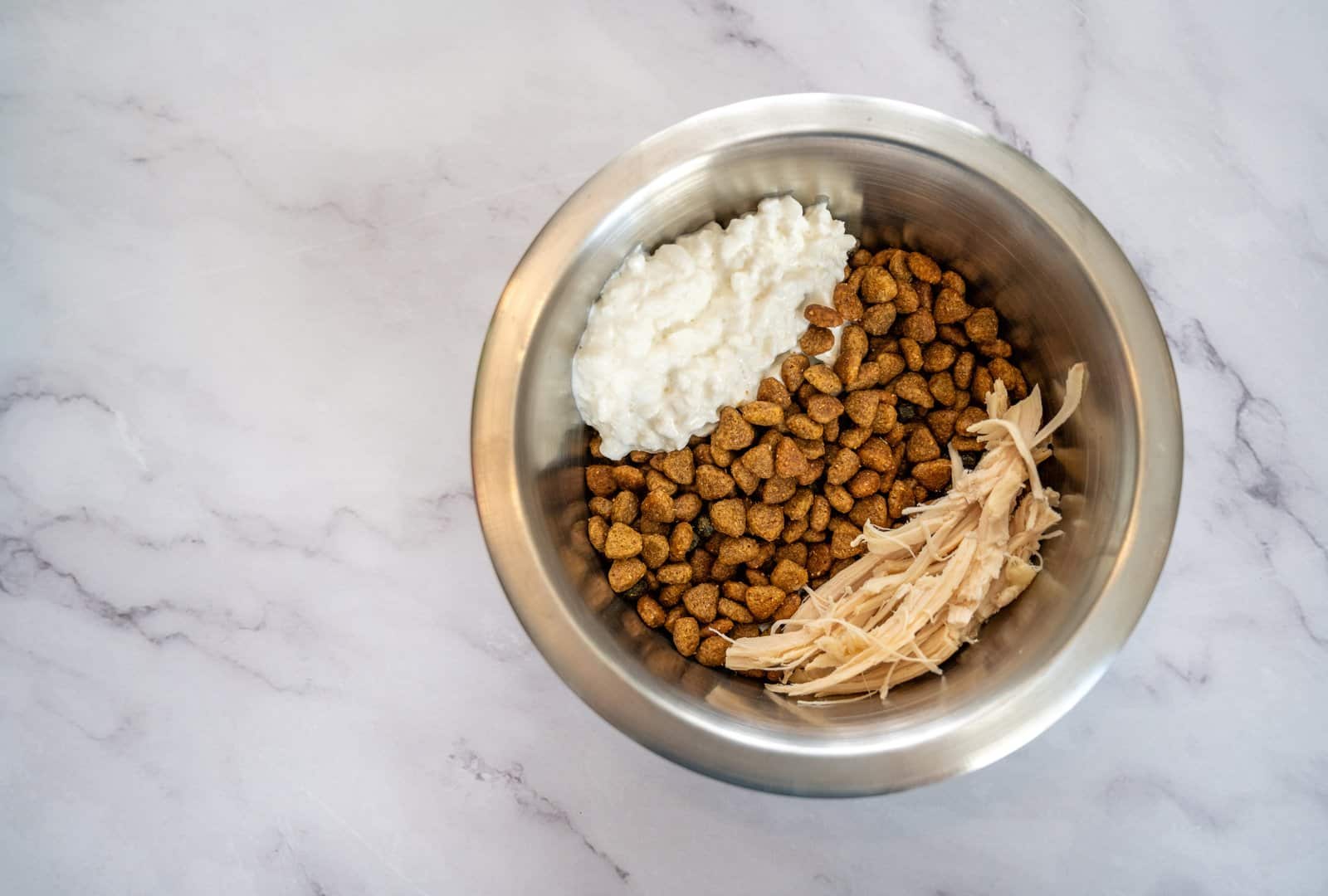
Yes, dogs can eat cottage cheese, but only in small amounts and only if your dog tolerates dairy without stomach upset.
Key Takeaways

- Plain, low-fat cottage cheese is safe for most healthy dogs as an occasional treat.
- Treats, including cheese, should make up no more than 10 percent of your dog’s daily calories.
- Start with a teaspoon for small dogs and a tablespoon for large dogs, then watch for diarrhea or gas.
- Avoid flavored varieties with onion, garlic, chives, raisins, or added sugar.
- Dogs with lactose intolerance, pancreatitis, or kidney disease shouldn’t eat cottage cheese unless a veterinarian approves it.
- Contact your vet if your dog shows vomiting, persistent diarrhea, or signs of abdominal pain after eating it.
Is Cottage Cheese Safe for Dogs
Plain cottage cheese is generally safe for dogs in moderation. It contains protein, calcium, and B vitamins, and many dogs find the mild flavor appealing. Because it’s lower in lactose than milk, some dogs with mild dairy sensitivity tolerate it better than other dairy products.
However, “safe” doesn’t mean “risk-free.” Cottage cheese is still a dairy product, and many dogs lack the enzyme needed to digest lactose fully. It also contains sodium and fat, which can cause problems if fed too often or in large portions. The safest choice is plain, low-fat cottage cheese without added seasonings, sweeteners, or fruit mix-ins.
Pro Tip: Choose a brand with live active cultures and no added salt if your dog has a sensitive stomach.
How Much Cottage Cheese Can a Dog Eat
The amount depends on your dog’s size, age, activity level, and overall diet. As a general rule, treats shouldn’t exceed 10 percent of a dog’s daily caloric intake. For most healthy adult dogs, a few spoonfuls once or twice a week is plenty.
Use these typical ranges as a starting point, not as a strict prescription:
| Dog size | Typical serving | Frequency |
|---|---|---|
| Small (under 25 lbs) | 1–2 teaspoons | 1–2 times per week |
| Medium (25–50 lbs) | 1–2 tablespoons | 1–2 times per week |
| Large (over 50 lbs) | 2–4 tablespoons | 1–2 times per week |
Introduce cottage cheese slowly. Offer a small spoonful and wait 12 to 24 hours to see whether your dog develops loose stool, gas, or vomiting. If there’s no reaction, you can gradually work up to the amount in the table above. If your dog is on a complete and balanced commercial dog food, it already receives the nutrients it needs, so cottage cheese should remain an occasional addition rather than a meal replacement.
Benefits of Cottage Cheese for Dogs
Cottage cheese offers several nutritional benefits when fed responsibly:
- High-quality protein: Supports muscle maintenance and repair.
- Calcium: Helps maintain strong bones and teeth.
- B vitamins: Aid energy metabolism and nervous system function.
- Probiotics: Some varieties contain live cultures that may support digestive health.
- Palatability: The mild taste and soft texture make it useful for hiding pills or encouraging a picky eater.
These benefits apply only when cottage cheese is a small part of the diet. Feeding large amounts can unbalance the calcium-to-phosphorus ratio and contribute to weight gain.
Warning: Don’t use cottage cheese as a primary protein source or a substitute for veterinary-prescribed food, especially for growing puppies or dogs with medical conditions.
Risks and Side Effects

Even plain cottage cheese can cause problems for some dogs. The main concerns include:
- Lactose intolerance: Symptoms include gas, bloating, diarrhea, and vomiting.
- High sodium: Excess salt can lead to increased thirst and urination, and may be dangerous for dogs with heart or kidney disease.
- Fat content: Full-fat varieties add calories and can trigger pancreatitis in susceptible dogs.
- Weight gain: Regular treat feeding without adjusting meals can lead to obesity.
If your dog experiences any of the following after eating cottage cheese, stop feeding it and contact your veterinarian:
- Watery or bloody diarrhea
- Repeated vomiting
- Lethargy or loss of appetite
- Signs of abdominal pain, such as whining or a hunched posture
Dogs That Should Avoid Cottage Cheese
Certain dogs shouldn’t eat cottage cheese at all, or should only have it with explicit veterinary approval:
- Dogs with diagnosed lactose intolerance or dairy allergies
- Dogs with a history of pancreatitis
- Dogs with kidney disease, because of phosphorus and protein load
- Dogs with heart disease or hypertension, because of sodium content
- Overweight or obese dogs on calorie-restricted diets
- Puppies still transitioning to solid food, unless a vet recommends it
If your dog falls into any of these categories, ask your veterinarian before offering any dairy product.
What to Look for on the Label
Not all cottage cheese is created equal. Check the ingredient list before sharing any with your dog:
- Choose plain varieties without fruit, herbs, or savory mix-ins.
- Avoid products containing onion, garlic, chives, or raisins, which are toxic to dogs.
- Skip versions with added sugar, artificial sweeteners such as xylitol, or heavy cream.
- Low-fat or reduced-sodium options are generally preferable.
Xylitol is especially dangerous because it can cause a rapid drop in blood sugar and liver failure in dogs. While it’s uncommon in plain cottage cheese, always read the label on flavored or “lite” products.
Cottage Cheese Compared With Other Dairy Treats
Cottage cheese isn’t the only dairy option dog owners consider. The table below compares common choices:
| Dairy item | Lactose level | Typical safety note |
|---|---|---|
| Cottage cheese (plain, low-fat) | Moderate | Generally tolerated in small amounts |
| Plain yogurt | Lower due to fermentation | Often easier to digest; avoid added sugar |
| Cheddar or mozzarella | Lower | High in fat and salt; tiny pieces only |
| Milk | High | Common cause of diarrhea in dogs |
| Ice cream | High | Contains sugar and often toxic ingredients |
Plain yogurt with live cultures may be gentler on some stomachs than cottage cheese, but the same 10 percent treat rule applies. Never give your dog dairy that contains chocolate, raisins, macadamia nuts, or artificial sweeteners.
How to Introduce Cottage Cheese Safely
Follow these steps the first time you offer cottage cheese to your dog:
- Select a plain, low-fat variety with no added seasonings or sweeteners.
- Offer a tiny amount—about a teaspoon for a small dog or a tablespoon for a large dog.
- Mix it into your dog’s regular food or place it on a spoon as a treat.
- Observe your dog for 12 to 24 hours for signs of digestive upset.
- If there are no issues, you can offer the same amount again in a few days.
- Never exceed the typical serving ranges listed above, and keep total treats under 10 percent of daily calories.
If your dog refuses it or develops soft stool, discontinue use and try a different treat.
Creative Ways to Serve Cottage Cheese

Cottage cheese can be more than a plain spoonful. Try these dog-friendly serving ideas:
- Mix a teaspoon into dry kibble to add moisture and aroma.
- Stuff a small amount into a hollow chew toy and freeze it for a longer-lasting treat.
- Use a tiny dab to conceal a pill or capsule.
- Blend with plain pumpkin puree (not pie filling) for a fiber-rich snack.
- Spoon over a lick mat with a few blueberries for enrichment.
Keep portions tiny. Even healthy additions count toward the daily treat limit.
Frequently Asked Questions
Can puppies eat cottage cheese?
Puppies can have a tiny taste of plain cottage cheese once they’re eating solid food, but their digestive systems are more sensitive than adult dogs’. Offer no more than a teaspoon and watch for loose stool. Because puppies need precise nutrition for growth, treats should remain minimal and a veterinarian should approve any new food.
Is cottage cheese good for dogs with upset stomachs?
Some veterinarians suggest bland diets for mild digestive upset, and plain cottage cheese is sometimes included in small amounts because it’s gentle and protein-rich. However, it isn’t a cure, and dairy can worsen diarrhea in lactose-intolerant dogs. Call your vet before using it as a home remedy, especially if vomiting or lethargy is present.
Can dogs eat cottage cheese every day?
Daily feeding isn’t recommended for most dogs. Even small amounts add calories, sodium, and lactose that can accumulate over time. Stick to an occasional treat—typically once or twice a week—and keep the portion within the ranges based on your dog’s size.
What if my dog ate a whole container of cottage cheese?
A large amount at once can cause vomiting, diarrhea, or pancreatitis, especially if the product is high in fat. Remove the container, note how much was eaten and whether it contained harmful ingredients, and contact your veterinarian or an animal poison control line for guidance.
Is low-fat cottage cheese better than full-fat for dogs?
Yes. Low-fat or reduced-fat plain cottage cheese provides protein and calcium with fewer calories and less risk of triggering pancreatitis. It remains a treat, not a meal, and should still be limited to small, occasional portions.
Can cottage cheese help a dog gain weight?
It can add calories, but it isn’t a balanced weight-gain strategy. If your dog is underweight, the cause should be diagnosed by a veterinarian. Relying on cottage cheese can create nutritional imbalances and digestive issues rather than healthy weight gain.
Conclusion
Keep cottage cheese as an occasional, plain, low-fat treat and watch your dog’s reaction after the first serving. If your dog tolerates it well, a small spoonful once or twice a week is a reasonable way to add variety without disrupting a complete and balanced diet.
